
One of the world’s oldest and most developed climate change research centres, our evidence seeks to understand the impacts of climate change and inform the transition to a sustainable, low-carbon and resilient future.
The Tyndall Centre for Climate Change Research was a ground-breaking experiment when it was launched in 2000. Twenty-five years later, it has become the international role model for interdisciplinary climate change research that is academically rigorous and policy relevant.
“While other countries were talking about new approaches for bringing intelligence to bear on the unprecedented challenge of climate change, the UK was actually doing something about it.” -Professor Bill Clarke, Harvard University
The Tyndall Centre is a unique partnership of universities that brings together climate change expertise from across the scientific, engineering, social and natural sciences, and economic communities.
Since our founding, we have:
- Advanced analysis of emissions reduction pathways across major energy sectors
- Strengthened understanding of climate impacts, risks, and adaptation options
- Shaped thinking on public perceptions of climate change
- Influenced debates on climate governance, negotiations and policymaking
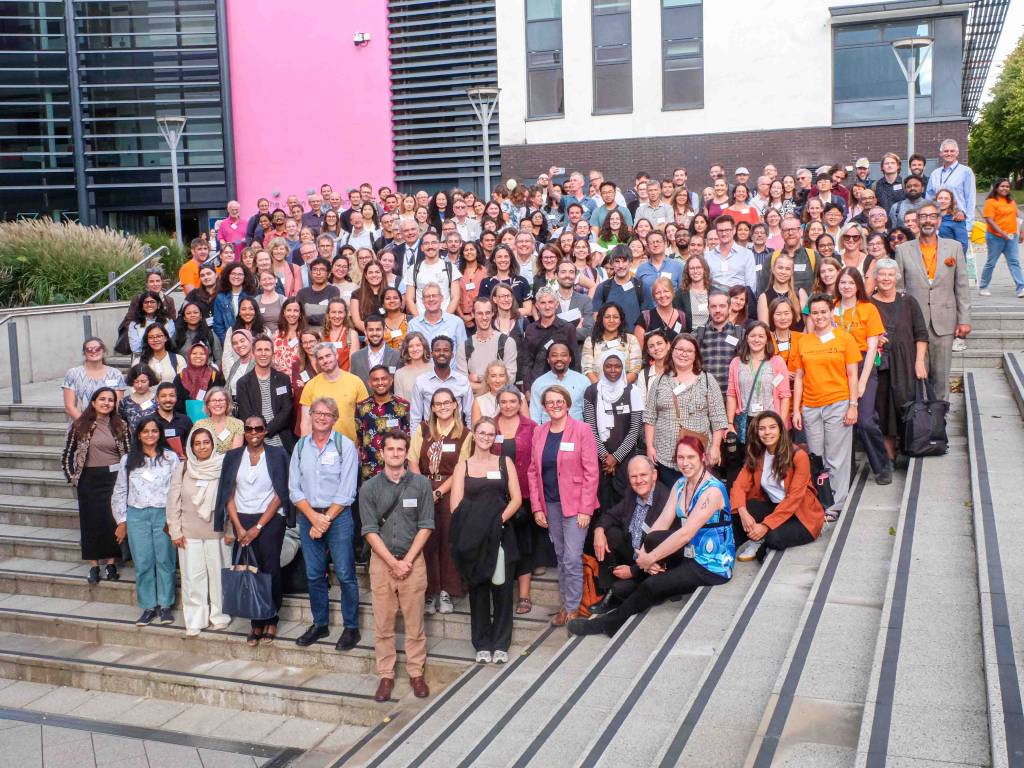
We are a network of more than 300 members – from early career researchers to leading emeritus professors. Through the Tyndall Early Career Network (TECN), we support and develop the next generation of climate researchers.
Vision, mission and principles
Vision: A sustainable, near-zero carbon future.
Mission: To provide high-quality, robust and impartial evidence to inform society’s transition to a sustainable, near-zero carbon future that is climate-resilient, just and equitable.
Our principles:
- Scientifically integrative
- Solutions-orientated
- Socially interactive
Our objective is to produce research that informs and improves international, national and local climate policy. We speak clearly about the risks and opportunities presented by climate change, so that our research best serves society.
Research focus
Societal responses to climate change require urgent action now. Our 2025-2030 research strategy sets out our priorities and approach for the next five years, during which we need deep, rapid and sustained emission reductions that go beyond current policy commitments.
Four research themes continue to connect the activities of our partners and drive everything that we do:
- Catalysing adaptation and resilience
- Reaching zero emissions
- Achieving health and wellbeing through climate action
- Accelerating social change
Across all our work, we prioritise:
- Valuing nature and its vital role in ecosystem function, mitigation, adaptation, human wellbeing, and the circular economy
- The historical inequality of geographically uneven emissions and wealth, and the importance of attribution and responsibility for loss and damage
- Decolonial thinking and enhanced justice and equity
We support a low-carbon research culture through our Code of Conduct.
Governance and funding
The Tyndall Centre’s headquarters are based at the University of East Anglia (UEA) in Norwich, UK. From here, our management team provide communications, operations, and administrative support. Our Director is Professor Andrew Jordan.
The Tyndall Centre is governed by a Council of partner representatives, theme leaders, and senior advisors. An annual Assembly brings together members from across the partnership to shape strategic direction and respond to emerging challenges.
Tyndall partners receive several million per year in project funding, including from public and private consultations on how to respond to climate change. From 2000 to 2010, the Tyndall Centre was core-funded to a total of £19m by the Natural Environment Research Council, the Engineering and Physical Science Research Council, and the Economic and Social Research Council.