Tyndall Centre Publications
The following database includes publications by researchers exclusively from the University of East Anglia (UEA) and the University of Manchester.
Aguilar-Hernandez, Glenn A.; Guerrero, Ana Belén; Vásquez-Ibarra, Leonardo; Rebolledo-Leiva, Ricardo; Gallego-Schmid, Alejandro
Is academia addressing relevant questions to support a circularity transition in Latin America and the Caribbean? Journal Article
In: Journal of Industrial Ecology, 2026, ISSN: 1088-1980.
@article{bf4672957f9a4ea1b6e525e728c98fb1,

title = {Is academia addressing relevant questions to support a circularity transition in Latin America and the Caribbean?},

author = {Glenn A. Aguilar-Hernandez and Ana Belén Guerrero and Leonardo Vásquez-Ibarra and Ricardo Rebolledo-Leiva and Alejandro Gallego-Schmid},

doi = {10.1007/s44498-026-00038-8},

issn = {1088-1980},

year  = {2026},

date = {2026-03-11},

journal = {Journal of Industrial Ecology},

publisher = {Springer Nature},

abstract = {Latin America and the Caribbean (LAC) is advancing toward a Circular Economy (CE), supported by expanding policy initiatives and a growing body of academic research. Over the past decade, CE academic studies in the region have examined developments at multiple sectors, scales and circular strategies, thus, contributing to CE research in the region. Yet, it remains uncertain whether academic research addresses the critical questions most relevant for non-academic stakeholders—including policymakers, practitioners, and businesses—to support the CE transition in LAC. To assess this alignment, we compared 51 priority questions identified by 19 CE experts in LAC countries with the research objectives of 335 scientific publications on CE in the region. The analysis reveals the extent to which stakeholder priorities are reflected in academic literature and highlights persistent gaps where further research is needed. Our findings stress the importance of fostering more collaborative, transdisciplinary, and stakeholder-oriented research to accelerate a just and effective CE transition in LAC.},

keywords = {},

pubstate = {published},

tppubtype = {article}

}
Svensson-Hoglund, Sahra; Russell, Jennifer D.; Richter, Jessika Luth; Dewick, Paul; Milios, Leonidas; Friant, Martin Calisto; Velenturf, Anne P. M.; Kambanou, Marianna Lena; Grousset, Rich; Goldmark, Sandra; Gallego-Schmid, Alejandro; Newton, Joshua; Novich, Laura; Dalhammar, Carl
Advancing Our Understanding of CE Loop Strategies: A Synthesizing Framework for Durable Consumer Products Journal Article
In: Circular Economy and Sustainability, vol. 6, no. 2, 2026, ISSN: 2730-5988.
@article{ce464cd6d34949f6af3e4be913b49915,

title = {Advancing Our Understanding of CE Loop Strategies: A Synthesizing Framework for Durable Consumer Products},

author = {Sahra Svensson-Hoglund and Jennifer D. Russell and Jessika Luth Richter and Paul Dewick and Leonidas Milios and Martin Calisto Friant and Anne P. M. Velenturf and Marianna Lena Kambanou and Rich Grousset and Sandra Goldmark and Alejandro Gallego-Schmid and Joshua Newton and Laura Novich and Carl Dalhammar},

doi = {10.1007/s43615-026-00748-y},

issn = {2730-5988},

year  = {2026},

date = {2026-02-28},

journal = {Circular Economy and Sustainability},

volume = {6},

number = {2},

publisher = {Springer Nature},

abstract = {The Circular Economy (CE) concept is widely promoted as a pathway to sustainability, yet its practical realization can appear to be challenging and unclear due to divergent definitions, interpretations and understanding about the implications and goals of a realized CE. Addressing this gap, this study develops the Circular Economy Loop Strategies (CELS) Framework, a synthesizing foundational model that defines and organizes five overarching strategies—simplifying, narrowing, slowing, intensifying, and closing—within a material flow perspective for durable consumer products, such as electronics and furniture. The framework delineates how varying CE goals (e.g., recycling vs. sufficiency) can influence material flow outcomes and, for each strategy, outlines overlaps and trade-offs while linking them to CELS characteristics: trajectory, magnitude, composition, and rate of flow. The CELS Framework was constructed through a critical review of CE literature and refined via a two-round Delphi study with 17 international experts from academia, industry, policy, and non-profit sectors. Results indicate strong consensus (89% agreement) on the framework’s validity and usefulness for mapping CE strategies and evaluating their implications across different CE versions—from recycling-focused approaches to sufficiency-driven models. This research contributes to CE theory by providing a clearer conceptual foundation and vocabulary, as well as provides a foundational tool for policymakers and practitioners to support strategic planning and alignment in CE transitions. The framework highlights the need for integrated strategies to achieve environmental sustainability and serves as a starting point for future research on operationalization, prioritization, and social dimensions of circularity.},

keywords = {},

pubstate = {published},

tppubtype = {article}

}
Bullock, Simon
Shipping and Climate Change Miscellaneous
2026.
@misc{d5b8b6d48c7a4e8dbd41ca9e88de7b50,

title = {Shipping and Climate Change},

author = {Simon Bullock},

year  = {2026},

date = {2026-02-25},

publisher = {Tyndall Centre},

address = {United Kingdom},

abstract = {This overview briefing sets out the challenge of climate change as faced by the shipping sector. It summarises research at the Tyndall Centre on these issues},

keywords = {},

pubstate = {published},

tppubtype = {misc}

}
Fernandes, A. R.; Lake, Iain; Diletti, G.; Ceci, R.; Scortichini, G.
Relative Disposition of PCDD/Fs and PCBs in Paired Liver and Muscle Tissues from Different Species of Farm Animals and Different Contamination Scenarios Journal Article
In: Environmental Research, 2026, ISSN: 0013-9351.
@article{2f75249346f84a75a9631493f333cb68,

title = {Relative Disposition of PCDD/Fs and PCBs in Paired Liver and Muscle Tissues from Different Species of Farm Animals and Different Contamination Scenarios},

author = {A. R. Fernandes and Iain Lake and G. Diletti and R. Ceci and G. Scortichini},

issn = {0013-9351},

year  = {2026},

date = {2026-01-23},

journal = {Environmental Research},

publisher = {Elsevier},

abstract = {Polychlorinated dibenzo-p-dioxins and furans (PCDD/Fs) and polychlorinated biphenyls (PCBs) are preferentially retained in animal liver and adipose. Distribution between these tissues is of particular interest in species raised for food but is difficult to ascertain because of limited study numbers, most of which use tissues sourced from different animals. This report overcame such limitations by using paired liver/muscle from the same animals. It combined data from seven independent studies on four species and variable (low, moderate, high) levels of pasture/housing contamination. In >150 animals sampled in the UK and Italy, PCDD/F and PCB toxic equivalence (TEQ) occurred to a significantly (P<0.001) higher level in livers of sheep and pigs (>15:1, liver:muscle), reducing to 4:1 for cattle, but chicken tissues showed similar distribution. Occurrence levels were consistent with pasture contamination. Congener patterns in muscle and liver were similar for chickens and pigs but were notable different for PCDD/Fs in sheep. Remarkably, PCDD/Fs consistently dominated the TEQ in UK cattle and sheep (average, 69% - liver and 52% - muscle), rising to 69% (chickens) and 81-95% (pigs). Conversely, PCBs dominated TEQ (average, 65-95% and 80-98% in liver and muscle respectively) in Italian cattle and sheep. This divergence may arise from differences in feed, husbandry and geography but elevated PCB contamination has been reported in some Southern Italian locations. The higher liver contamination corresponds to the ability of these contaminants to induce and bind to the hepatic CYP1A2 enzyme, restricting CYP-mediated metabolism with resulting liver retention or sequestration.},

keywords = {},

pubstate = {published},

tppubtype = {article}

}
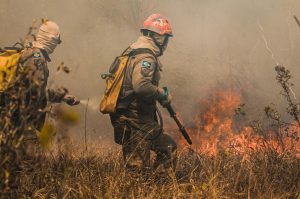
Falleiro, Rodrigo Moraes; Rodovalho, Fernando Viana; Zacharias, Gabriel Constantino; Oliveira, Guilherme Camargo; Schmidt, Isabel Belloni; Steil, Lara; Carmenta, Rachel
Wildfire protection in indigenous lands of Brazil: the role of fire brigades programs Journal Article
In: Humanities and Social Sciences Communications, vol. 13, no. 1, 2026, ISSN: 2662-9992, (Data availability: The data on active fires used in the survey is public and available at https://terrabrasilis.dpi.inpe.br/queimadas/bdqueimadas/.).
@article{915117dd1ef34eb58dba21d1a4c1ee9f,

title = {Wildfire protection in indigenous lands of Brazil: the role of fire brigades programs},

author = {Rodrigo Moraes Falleiro and Fernando Viana Rodovalho and Gabriel Constantino Zacharias and Guilherme Camargo Oliveira and Isabel Belloni Schmidt and Lara Steil and Rachel Carmenta},

doi = {10.1057/s41599-025-06390-7},

issn = {2662-9992},

year  = {2026},

date = {2026-01-20},

journal = {Humanities and Social Sciences Communications},

volume = {13},

number = {1},

publisher = {Springer Nature},

abstract = {Brazil’s indigenous lands (ILs) are important for global environmental sustainability. Despite this, ILs are increasingly threatened by wildfires, largely driven by climate change. The main public policy implemented by the Brazilian government to protect ILs has been the Federal Brigades Program (BRIFs), created in 2013 within the Brazilian Institute of the Environment and Renewable Natural Resources (Ibama). Coordinated by the National Center for Prevention and Suppression of Wildfires (Prevfogo), with the support of the National Indigenous Peoples Foundation (Funai), the BRIFs are the result of a long learning process, which led to the integrated fire management (IFM). Since then, protection strategies have begun to value social participation, traditional knowledge, and landscape management with prescribed burning. After a decade of operation, now is an opportune moment to evaluate the results of the BRIFs and the paradigm shift it represented. This study evaluated 42 ILs encompassing 25,355,413.6 hectares. Active fire satellite data, captured from outside the prescribed burning season, allowed estimation of wildfire occurrences. Using a before–after-control-intervention approach, ILs covered and not covered by BRIFs were compared before (2003–2012) and after (2014–2023) the program’s implementation. These treatments were evaluated both collectively and separately by ecosystems: fire-prone savannas (Cerrado biome) and fire-sensitive forests (Amazon biome). The data was analyzed using the Chi-Square Adherence test, graphs, and trend lines. Results show that ILs covered by BRIFs presented a significant reduction of 22.7% in the number of active fires following program implementation, whilst those not covered showed an increase of 12.3%. In the Cerrado biome, the reduction in the ILs covered by BRIFs was evident soon after program implementation. In the Amazon biome, this reduction took longer, but the differences are highlighted by the trend curves. These results were achieved with an annual investment of USD 1.02 per hectare protected. We conclude that BRIFs have been effective in protecting Brazil’s ILs from wildfires. Due to its efficiency, combined with low financial cost and equitable gains, the BRIFs Program offers a model for the protection of regions with ecological and social similarities, such as many tropical countries.},

note = {Data availability: The data on active fires used in the survey is public and available at https://terrabrasilis.dpi.inpe.br/queimadas/bdqueimadas/.},

keywords = {},

pubstate = {published},

tppubtype = {article}

}
Bullock, Simon; Larkin, Alice
British Industrial Competitiveness Scheme (BICS): consultation response Miscellaneous
2026.
@misc{e3461e47593645d9b46a0ca9524a378f,

title = {British Industrial Competitiveness Scheme (BICS): consultation response},

author = {Simon Bullock and Alice Larkin},

year  = {2026},

date = {2026-01-19},

abstract = {The BICS consultation sets out proposals to exempt certain UK sectors from some policy costs on electricity consumption. This response argues that ports should also be an eligible sector for this scheme. Doing so would help tackle the market failure in the shipping sector where the most polluting fuels face the lowest policy costs.},

keywords = {},

pubstate = {published},

tppubtype = {misc}

}
Bullock, Simon; Larkin, Alice
UK ETS:: Scope expansion - emissions from international maritime voyages consultation (accessible webpage) Miscellaneous
2026.
@misc{432558e88383427196af56b99387045e,

title = {UK ETS:: Scope expansion - emissions from international maritime voyages consultation (accessible webpage)},

author = {Simon Bullock and Alice Larkin},

year  = {2026},

date = {2026-01-19},

abstract = {Response to UK Government consultation on including international shipping emissions in the UK ETS. The response is in broad agreement with the consultation, but argues for more comprehensive coverage of the scheme, greater ambition, and a clear focus on delivering on the International Maritime Organisation's "just and equitable transition" objective.},

keywords = {},

pubstate = {published},

tppubtype = {misc}

}
Carmenta, Rachel; Anderson, Liana; Armijos, M. Teresa; Lugo, Victoria; Marsh, Hazel; Young, Maria Eugenia Ulfe
Global Framings of Pandemic Recovery: Insights Across Conservation, Development and Health Fields Journal Article
In: The Journal of Environment & Development, 2026, ISSN: 1552-5465.
@article{e813f714a0864f6e88c09fb23e231075,

title = {Global Framings of Pandemic Recovery: Insights Across Conservation, Development and Health Fields},

author = {Rachel Carmenta and Liana Anderson and M. Teresa Armijos and Victoria Lugo and Hazel Marsh and Maria Eugenia Ulfe Young},

doi = {10.1177/10704965251407170},

issn = {1552-5465},

year  = {2026},

date = {2026-01-16},

journal = {The Journal of Environment & Development},

abstract = {In many contexts recovery from COVID-19 is ongoing. The impacts of the pandemic were diverse and their distribution uneven, which may in part explain the diversity in the ways in which its recovery has been framed. Numerous framings concerning what constitutes ‘recovery’, what its pursuit should entail, who (or what) it should target and whose vision the notion of recovery should represent have been expressed by various fields of study. An assessment of the way in which diverse fields (e.g. health, conservation and development) have represented the priorities of recovery from the COVID-19 pandemic is so far not available. This knowledge gap is important since understanding the threads in common, and those distinct between fields, may help move towards a more integrated appraisal of the multiple priorities salient to recovery. Integration however also involves representing diverse knowledges, values and lived experiences and supporting disaster-resilient communities requires being attentive to the voices of the most marginalized. Due recognition of and engagement with these groups is essential for enhancing the justice and equity of recovery-focused interventions, and can help ensure that interventions do not presume, misplace or misrepresent local priorities. With growing recognition of the need for decolonial, grounded and co-developed responses to processes of recovery, nature futures and global development there is a need to understand how COVID-19 recovery has been conceived and articulated across fields, and crucially, the extent to which it has included the perceptions of socially, economically and politically marginalized groups. We analyzed 30 papers (10 per field), and asked (1) How does COVID-19 recovery tend to be framed within these fields, including the representation of intersecting risks? (2) Where is there divergence and congruence in recovery discourses across these fields, and what would an integrated understanding of recovery look like? (3) To what extent are local voices reflected or acknowledged in these international framings? We found that while perspectives differed, all highlighted how COVID-19 exposed pre-existing interconnected crises. Many framed the root cause as flawed economic growth models, which was considered in need of various degrees of transformation combined with more integrated governance. Crucially, few framings had strong representation of local, or marginalized voices and relatively few papers actively grounded their calls, or prominently advocated for such practices. Our findings point to a need for more co-created knowledge generation and agenda setting for COVID-19 recovery, and disaster recovery more broadly.},

keywords = {},

pubstate = {published},

tppubtype = {article}

}
Dawson, Neil; Martin, Adrian; Rodriguez, Iokiñe
Why restoring nature can work so much more effectively when led by local people Journal Article
In: The Conversation, 2026.
@article{8bda53901cc44858ac03866e5ce14739,

title = {Why restoring nature can work so much more effectively when led by local people},

author = {Neil Dawson and Adrian Martin and Iokiñe Rodriguez},

doi = {10.64628/AB.76fjwewkm},

year  = {2026},

date = {2026-01-15},

journal = {The Conversation},

keywords = {},

pubstate = {published},

tppubtype = {article}

}
Ohenhen, L. O.; Shirzaei, M.; Davis, J. L.; Tiwari, A.; Nicholls, Robert; Dasho, O.; Sadhasivam, N.; Seeger, K.; Werth, S.; Chadwick, A. J.; Onyike, F.; Lucy, J.; Atkins, C.; Daramola, S.; Ankamah, A.; Minderhoud, P. S. J.; Olsemann, J.; Yemele, G. C.
The Global Threat of Sinking Deltas Journal Article
In: Nature, 2026, ISSN: 0028-0836.
@article{c9e37067928f4b079d2c51d9ccd5b1ea,

title = {The Global Threat of Sinking Deltas},

author = {L. O. Ohenhen and M. Shirzaei and J. L. Davis and A. Tiwari and Robert Nicholls and O. Dasho and N. Sadhasivam and K. Seeger and S. Werth and A. J. Chadwick and F. Onyike and J. Lucy and C. Atkins and S. Daramola and A. Ankamah and P. S. J. Minderhoud and J. Olsemann and G. C. Yemele},

issn = {0028-0836},

year  = {2026},

date = {2026-01-14},

journal = {Nature},

publisher = {Nature Publishing Group},

abstract = {River deltas are essential socio-ecological systems, sustaining dense human 30 populations, major economic centers, and vital ecosystems worldwide. Rising sea levels 31 and subsiding land threaten the sustainability of these valuable landscapes with relative sea-level rise and associated flood, land-loss, and salinization hazards. Despite these risks, vulnerability assessments are impeded by the lack of contemporary, high-resolution delta-wide subsidence observations. Here, we present spatially variable surface elevation changes across 40 global deltas using interferometric synthetic aperture radar. Using this dataset, we quantify delta surface elevation loss and reveal the prevalence and severity of subsidence in river deltas worldwide. Our analysis of three key anthropogenic drivers of delta elevation changes shows that groundwater storage have the strongest relative influence on VLM in 10 of the 40 deltas. In the other 2deltas, the contributions vary with mixed influences from multiple drivers or are dominated by sediment flux or urban expansion. Furthermore, we find that contemporary subsidence surpasses absolute (geocentric) sea-level rise as the dominant driver of relative sea-level rise for most deltas over the 21st century. These findings emphasize the need for targeted interventions addressing subsidence as an immediate and localized challenge, in parallel with broader efforts to mitigate/adapt to climate change-driven global sea-level rise.},

keywords = {},

pubstate = {published},

tppubtype = {article}

}
Smith, Roland; Nicholls, Robert; Tebboth, Mark; Kent, Avidan
Persistent vulnerability and precarious futures: the limits of adaptation in ‘climate migrant’ informal settlements of coastal Bangladesh Journal Article
In: Climate and Development, 2026, ISSN: 1756-5529.
@article{0285da2b9752410eb2946293666c94a4,

title = {Persistent vulnerability and precarious futures: the limits of adaptation in ‘climate migrant’ informal settlements of coastal Bangladesh},

author = {Roland Smith and Robert Nicholls and Mark Tebboth and Avidan Kent},

doi = {10.1080/17565529.2026.2619446},

issn = {1756-5529},

year  = {2026},

date = {2026-01-14},

journal = {Climate and Development},

publisher = {Taylor and Francis},

abstract = {Populations exposed and vulnerable to climatic shocks and environmental degradation are increasingly likely to employ migration as an adaptive strategy in response to escalating severity and frequency of hazards associated with climate change. This study responds to the critical need to assess the role of migration in adaptation, particularly how post-migration conditions shape vulnerability, well-being and opportunities for existing households and their subsequent generations. Drawing on qualitative, participatory research in so-called ‘climate migrant’ slums in southwest Bangladesh, the study examines how migration reconfigures household risk by changing levels of exposure whilst reshaping and potentially reproducing conditions of vulnerability. While moving away from high-risk rural areas may reduce exposure, informal urban settlements remain exposed and are marked by socio-economic precarity and political exclusion, reinforcing vulnerability. Many such households are rendered immobile, both in terms of future migration and socio-economic mobility. Therefore, the success of migration as an adaptation strategy will depend not only on reducing exposure to hazards but also on addressing broader social, economic and political factors that shape vulnerability, enabling households to withstand future hazards and support long-term development.},

keywords = {},

pubstate = {published},

tppubtype = {article}

}
Brainard, Julii; Sedekia, Yovitha; Jones, Natalia R.; Matte, Michael; Sunday, Patrick; Watson-Jones, Deborah; Mapemba, Daniel Dennis; Kabakama, Severin A; Mulogo, Edgar Mugema; Ntaro, Moses; Tran, Hanh Thi; Hunter, Paul; Geere, Jo-Anne
Extreme weather impacts on health services and communities in lower income countries : A thematic systematic review Journal Article
In: Transactions of the Royal Society of Tropical Medicine and Hygiene, 2026, ISSN: 0035-9203, (Data availability: The data matrices are are available as Supplementary file S1 at https://osf.io/c95xq/files.).
@article{dc5d08f8c7144b28bbb7e8a82f7c8897,

title = {Extreme weather impacts on health services and communities in lower income countries : A thematic systematic review},

author = {Julii Brainard and Yovitha Sedekia and Natalia R. Jones and Michael Matte and Patrick Sunday and Deborah Watson-Jones and Daniel Dennis Mapemba and Severin A Kabakama and Edgar Mugema Mulogo and Moses Ntaro and Hanh Thi Tran and Paul Hunter and Jo-Anne Geere},

issn = {0035-9203},

year  = {2026},

date = {2026-01-12},

journal = {Transactions of the Royal Society of Tropical Medicine and Hygiene},

publisher = {Elsevier},

abstract = {BackgroundMost previous research about the dangers of extreme weather events was applicable to populations in high income countries. Data summarising harms related to extreme weather events in lower income settings are lacking.MethodsA systematic review thematically summarised evidence about weather-event-linked harms and responses in low- and lower-middle income countries. Peer review and grey literature were systematically searched and selected. Data were extracted about harms, responses and outcomes relevant to six WHO Building Blocks of health care systems. Framework analysis was used to identify predominant themes related to harms, responses and the WHO Building Blocks.ResultsIncluded reports numbered 183. Flooding and high winds were the most common type of extreme weather event documented. The main community experience themes identified were displacement of populations and disruption. The main themes identified for health service delivery were: Vulnerability, Disruption and Resilience. Documented examples of resilience or recovery were far fewer for all six WHO healthcare system Building Blocks than descriptions of vulnerability and disruption.ConclusionsExtreme weather events can be highly disruptive and harmful to health care systems and communities in LMIC settings that are often already highly vulnerable.},

note = {Data availability: The data matrices are are available as Supplementary file S1 at https://osf.io/c95xq/files.},

keywords = {},

pubstate = {published},

tppubtype = {article}

}
Kenny, John
Book Review: Polls, Pollsters, and Public Opinion: A Guide for Decision-Makers By Clifford Young and Kathryn Ziemer. Journal Article
In: Italian Political Science Review / Rivista Italiana di Scienza Politica, 2026, ISSN: 0048-8402.
@article{283f596dcbe943028bbe09e5d5f1aa43,

title = {Book Review: Polls, Pollsters, and Public Opinion: A Guide for Decision-Makers By Clifford Young and Kathryn Ziemer.},

author = {John Kenny},

doi = {10.1017/ipo.2025.10085},

issn = {0048-8402},

year  = {2026},

date = {2026-01-12},

journal = {Italian Political Science Review / Rivista Italiana di Scienza Politica},

publisher = {Cambridge University Press},

keywords = {},

pubstate = {published},

tppubtype = {article}

}
Schmid, Alejandro Gallego; Guerrero, Ana Belén; Rebolledo‐Leiva, Ricardo; Elorrieta‐Mendoza, Alvaro; Cotohuanca, Denisse Milagros Paredes; Tarpani, Raphael; Salvador, Rodrigo; Barros, Murillo Vetroni; Henninger, Claudia; Vásquez‐Ibarra, Leonardo
Social, Technological, Economic, and Policy Factors in the Circular Economy Transition in Brazil Journal Article
In: Sustainable Development, 2025, ISSN: 0968-0802.
@article{7058ac1186a448e5bdab7603c352370e,

title = {Social, Technological, Economic, and Policy Factors in the Circular Economy Transition in Brazil},

author = {Alejandro Gallego Schmid and Ana Belén Guerrero and Ricardo Rebolledo‐Leiva and Alvaro Elorrieta‐Mendoza and Denisse Milagros Paredes Cotohuanca and Raphael Tarpani and Rodrigo Salvador and Murillo Vetroni Barros and Claudia Henninger and Leonardo Vásquez‐Ibarra},

doi = {10.1002/sd.70576},

issn = {0968-0802},

year  = {2025},

date = {2025-12-21},

journal = {Sustainable Development},

publisher = {John Wiley & Sons Ltd},

abstract = {A well-functioning circular economy (CE) integrates resilience across economic, environmental, and social dimensions. This study identifies key drivers and barriers to Brazil's CE transition through 20 semi-structured interviews with stakeholders. Major sociocultural barriers include inadequate education and limited CE awareness, while growing environmental consciousness and traditional reuse practices act as drivers. Policy barriers stem from the absence of dedicated CE regulations, though national sustainability efforts offer opportunities. Technological limitations arise from insufficient research, but efficiency-enhancing innovations and digital business models show promise. Economically, high transition costs hinder progress, whereas resource efficiency boosts competitiveness and job creation. Key priorities for advancing CE include raising public awareness, integrating CE into education, supporting waste pickers, developing decentralised regulations, improving waste management, fostering innovation hubs, and providing financial incentives for circular business models. Stakeholder engagement—particularly policymakers, civil society, and private enterprises—remains essential to accelerating CE adoption in Brazil.},

keywords = {},

pubstate = {published},

tppubtype = {article}

}
Jones, David; Maria, Corrado Di; Valente, Simone
Financial Intermediation and Structural Change Journal Article
In: The Scandinavian Journal of Economics, 2025, ISSN: 0347-0520.
@article{a72bbb1d4d2c49a6bf73c672cc0d7a87,

title = {Financial Intermediation and Structural Change},

author = {David Jones and Corrado Di Maria and Simone Valente},

issn = {0347-0520},

year  = {2025},

date = {2025-12-19},

journal = {The Scandinavian Journal of Economics},

publisher = {Wiley},

abstract = {Does financial intermediation affect structural change? We address this question both theoretically and empirically, focussing on whether financial development reinforces structural change during the post-industrialization phase, where employment, value-added and expenditure shares change towards services and away from manufacturing. We build a dynamic general equilibrium model in which structural change may be driven by mutually independent engines – sectoral productivity gaps, asymmetric factor elasticities – as well as by learning by doing. In all its variants, the model robustly predicts that exogenous reductions in intermediation costs – e.g., deregulation shocks – reinforce structural change. We take this prediction to the data by examining the effects of bank branching deregulation in the United States in the 1960s-1990s period. Within a staggered difference-in-differences framework, we show that bank branching deregulation reinforced the pattern of structural change already underway, leading to an increase in the services share of output and employment in deregulated states.},

keywords = {},

pubstate = {published},

tppubtype = {article}

}
Ouyang, Zutao; Jackson, Robert B.; Saunois, Marielle; Canadell, Josep G.; Zhao, Yuanhong; Morfopoulos, Catherine; Krummel, Paul B.; Patra, Prabir K.; Peters, Glen P.; Dennison, Fraser; Gasser, Thomas; Archibald, Alexander T.; Arora, Vivek; Baudoin, Gabriel; Chandra, Naveen; Ciais, Philippe; Davis, Stephen J.; Feron, Sarah; Guo, Fangzhou; Hauglustaine, Didier; Jones, Christopher D.; Jones, Matthew; Kato, Etsushi; Kennedy, Daniel; Knauer, Jürgen; Lienert, Sebastian; Lombardozzi, Danica; Melton, Joe R.; Nabel, Julia E. M. S.; O'Sullivan, Michael; Pétron, Gabrielle; Poulter, Benjamin; Rogelj, Joeri; Calle, David Sandoval; Smith, Pete; Suntharalingam, Parvadha; Tian, Hanqin; Wang, Chenghao; Wiltshire, Andy
The global hydrogen budget Journal Article
In: Nature, vol. 648, no. 8094, pp. 616–624, 2025, ISSN: 0028-0836, (Data availability Anthropogenic emission data: CEDS data are available from https://aims2.llnl.gov/search/input4MIPs/, EDCAR v.8.1 is available from https://edgar.jrc.ec.europa.eu/dataset_ap81/, ECLIPSE v.6b is available from https://iiasa.ac.at/models-tools-data/ global-emission-fields-of-air-pollutants-and-ghgs/. Fire burning and emission data: GFED is available from https://www.globalfiredata. org/, FINN is available from https://rda.ucar.edu/datasets/d312009/, GFAS is available from ECMWF at https://www.ecmwf.int/en/forecasts/ dataset/global-fire-assimilation-system, and QFED is available from https://ftp.as.harvard.edu/gcgrid/data/ExtData/HEMCO/QFED/v2018· 07/. CMIP6 fire data is obtained from https://aims2.llnl.gov/search/ input4MIPs/. Biogenic VOC emission data: MEGANv3.2 VOC is obtained from https://www.scidb.cn/en/detail?dataSetId=flcdb0cfbd70410d 88f491a75844912b, and CAMS-GLOB-BIOvl.2, CAMS-GLOB-BIOv3.0, CAMS-GLOB-BlOv3.1, and MEGAN-MACC are obtained from https:// eccad.aeris-data.fr/. OH fields and CH, fields: INVAST OH Fields can be requested from Didier Hauglustaine, other seven CMIP6 OH fields are available from https://aims2.llnl.gov/search/input4MIPs/, The three CH4 fields can be requested from Marielle Saunois and Prabir K. Patra. Soil attributes: GLDAS data are available from https://ldas.gsfc. nasa.gov/gldas, and TRENDY model data are obtained from individual modelers and also partially available at https://mdosullivan.github.io/ GCB/. Different emission factors are summarized in Supplementary Information, and the gridded Η2 sinks and sources data produced in this study is available at Zenodo (https://zenodo.org/records/17162658). Figure 2 is created using Adobe Illustrator. Source data are provided with this paper.).
@article{f45a17f7065f47bfb398bb42953a6654,

title = {The global hydrogen budget},

author = {Zutao Ouyang and Robert B. Jackson and Marielle Saunois and Josep G. Canadell and Yuanhong Zhao and Catherine Morfopoulos and Paul B. Krummel and Prabir K. Patra and Glen P. Peters and Fraser Dennison and Thomas Gasser and Alexander T. Archibald and Vivek Arora and Gabriel Baudoin and Naveen Chandra and Philippe Ciais and Stephen J. Davis and Sarah Feron and Fangzhou Guo and Didier Hauglustaine and Christopher D. Jones and Matthew Jones and Etsushi Kato and Daniel Kennedy and Jürgen Knauer and Sebastian Lienert and Danica Lombardozzi and Joe R. Melton and Julia E. M. S. Nabel and Michael O'Sullivan and Gabrielle Pétron and Benjamin Poulter and Joeri Rogelj and David Sandoval Calle and Pete Smith and Parvadha Suntharalingam and Hanqin Tian and Chenghao Wang and Andy Wiltshire},

doi = {10.1038/s41586-025-09806-1},

issn = {0028-0836},

year  = {2025},

date = {2025-12-17},

journal = {Nature},

volume = {648},

number = {8094},

pages = {616–624},

publisher = {Nature Publishing Group},

abstract = {Hydrogen (H2) will play a part in decarbonizing the global energy system1. However, hydrogen interacts with methane, ozone, and stratospheric water vapour, leading to an indirect 100-year global warming potential of 11 ± 4 (refs. 2,3,4,5). This raises concerns about the climate consequences of increasing H2 use under future hydrogen economies3,5. A comprehensive accounting of H2 sources and sinks is essential for assessing changes and mitigating environmental risks. Here we analyse trends in global H2 sources and sinks from 1990 to 2020 and construct a comprehensive budget for the decade 2010–2020. H2 sources increased from 1990 to 2020, primarily because of the oxidation of methane and anthropogenic non-methane volatile organic compounds, biogenic nitrogen fixation, and leakage from H2 production. Sinks also increased in response to rising atmospheric H2. Estimated global H2 sources and sinks averaged 69.9 ± 9.4 Tg yr−1 and 68.4 ± 18.1 Tg yr−1, respectively, for 2010–2020. Regionally, Africa and South America contained the largest sources and sinks of H2, whereas East Asia and North America contributed the most H2 emissions from fossil fuel combustion. We estimate that rising atmospheric H2 between 2010 and 2020 contributed to an increase in global surface air temperature (GSAT) of 0.02 ± 0.006 °C. GSAT impacts of changing atmospheric H2 in future marker Shared Socioeconomic Pathway scenarios are estimated to remain within 0.01–0.05 °C, depending on H2 usage, leakage rates and CH4 emissions that influence photochemical H2 production.},

note = {Data availability Anthropogenic emission data: CEDS data are available from https://aims2.llnl.gov/search/input4MIPs/, EDCAR v.8.1 is available from https://edgar.jrc.ec.europa.eu/dataset_ap81/, ECLIPSE v.6b is available from https://iiasa.ac.at/models-tools-data/ global-emission-fields-of-air-pollutants-and-ghgs/. Fire burning and emission data: GFED is available from https://www.globalfiredata. org/, FINN is available from https://rda.ucar.edu/datasets/d312009/, GFAS is available from ECMWF at https://www.ecmwf.int/en/forecasts/ dataset/global-fire-assimilation-system, and QFED is available from https://ftp.as.harvard.edu/gcgrid/data/ExtData/HEMCO/QFED/v2018· 07/. CMIP6 fire data is obtained from https://aims2.llnl.gov/search/ input4MIPs/. Biogenic VOC emission data: MEGANv3.2 VOC is obtained from https://www.scidb.cn/en/detail?dataSetId=flcdb0cfbd70410d 88f491a75844912b, and CAMS-GLOB-BIOvl.2, CAMS-GLOB-BIOv3.0, CAMS-GLOB-BlOv3.1, and MEGAN-MACC are obtained from https:// eccad.aeris-data.fr/. OH fields and CH, fields: INVAST OH Fields can be requested from Didier Hauglustaine, other seven CMIP6 OH fields are available from https://aims2.llnl.gov/search/input4MIPs/, The three CH4 fields can be requested from Marielle Saunois and Prabir K. Patra. Soil attributes: GLDAS data are available from https://ldas.gsfc. nasa.gov/gldas, and TRENDY model data are obtained from individual modelers and also partially available at https://mdosullivan.github.io/ GCB/. Different emission factors are summarized in Supplementary Information, and the gridded Η2 sinks and sources data produced in this study is available at Zenodo (https://zenodo.org/records/17162658). Figure 2 is created using Adobe Illustrator. Source data are provided with this paper.},

keywords = {},

pubstate = {published},

tppubtype = {article}

}
Kenny, John; Fisher, Stephen D.
Europeans’ climate consciousness: Increased yet more politicised Journal Article
In: Environmental Politics, 2025, ISSN: 0964-4016, (Data availability statement: The data analysed in this paper is accessible through the European Social Survey DataPortal: https://www.europeansocialsurvey.org/data-portal).
@article{4971d2cd96534abf8507b4e29d401986,

title = {Europeans’ climate consciousness: Increased yet more politicised},

author = {John Kenny and Stephen D. Fisher},

doi = {10.1080/09644016.2025.2597649},

issn = {0964-4016},

year  = {2025},

date = {2025-12-16},

journal = {Environmental Politics},

publisher = {Routledge},

abstract = {As climate change became more important to voters and political parties in the late 2010s in Europe, this paper asks whether aspects of public opinion on the issue also became more politicised, in the sense of being more closely linked to either party-family vote choice or left–right identity. We consider change from Wave 8 (2016–17) to Wave 10 (2020–22) of the European Social Survey (ESS). Climate consciousness increased overall, especially in Central and Eastern Europe. Politicisation of climate change increased mostly in Western Europe, where climate consciousness increased more on the left, and for left-wing party voters, than on the right. The Populist-Right party family, as a group, was distinctive in the relative stability of climate consciousness among their voters. Our results show increased politicisation of climate change attitudes within Western European countries, but also convergence between polities of the East and West at higher levels of climate consciousness.},

note = {Data availability statement: The data analysed in this paper is accessible through the European Social Survey DataPortal: https://www.europeansocialsurvey.org/data-portal},

keywords = {},

pubstate = {published},

tppubtype = {article}

}
Villaseñor, Adrián; Esposito, Lucio; Kumar, Sunil; Macedo, Sandra
The absolute and relative facets of the economic gradient in educational attainment: large-scale evidence from Brazil Journal Article
In: European Journal of Development Research, 2025, ISSN: 0957-8811.
@article{5346430cb92e4ae7934ffa5b483e5541,

title = {The absolute and relative facets of the economic gradient in educational attainment: large-scale evidence from Brazil},

author = {Adrián Villaseñor and Lucio Esposito and Sunil Kumar and Sandra Macedo},

issn = {0957-8811},

year  = {2025},

date = {2025-12-15},

journal = {European Journal of Development Research},

publisher = {Palgrave Macmillian},

abstract = {A large body of research has shown that students from better-off households tend to have higher educational achievement. However, there is scant evidence able to disentangle the role of absolute and relative economic status in affording this advantage. We address this gap by estimating econometric models where the two measures of economic status are jointly employed as explanatory variables: household income (reflecting command over resources) and relative deprivation (reflecting economic disadvantage relative to students in the same school). Using large data from seven waves of Brazilian high-stakes secondary education exams (N~8 million), we show robust evidence that both household income (0.020 SD [p<0.000]) and relative deprivation (-0.068 SD [p<0.000]) are significant predictors of exam scores. This suggests that the nature of the educational advantage granted by economic status is twofold. Although the variables available in the dataset do not allow us to test for specific mechanisms, the literature from an array of academic disciplines supports the interpretation of our empirical results that alongside the role played by household income through material pathways to education (e.g. affordability of a range of educational inputs such as food, transport, learning material, school fees, etc.), relative deprivation might also shape outcomes through psychosocial pathways related to self-esteem, aspirations, motivation and identity. In addition, our results suggest that the effects of relative deprivation might be more detrimental for those in households with higher incomes.},

keywords = {},

pubstate = {published},

tppubtype = {article}

}
Finkill, Guy; Gough, Clair; Mander, Sarah; Jones, Christopher
Reconfiguring industry in the United Kingdom. Global lessons for ambition versus policy on the path towards net-zero Journal Article
In: Energy Policy, vol. 207, 2025, ISSN: 0301-4215.
@article{91700eed163f467a917af871aa17754f,

title = {Reconfiguring industry in the United Kingdom. Global lessons for ambition versus policy on the path towards net-zero},

author = {Guy Finkill and Clair Gough and Sarah Mander and Christopher Jones},

doi = {10.1016/j.enpol.2025.114832},

issn = {0301-4215},

year  = {2025},

date = {2025-12-01},

journal = {Energy Policy},

volume = {207},

publisher = {Elsevier BV},

abstract = {High-emitting industrial processes are often concentrated in clusters that share infrastructure to maximise efficiency and reduce costs. These clusters, prevalent in many industrialised economies, pose significant challenges for decarbonisation due to their dependence on energy-intensive systems and legacy assets. Carbon capture and storage (CCS) is frequently promoted as a key solution for reducing emissions in these hard-to-abate sectors. Drawing on an adapted ‘Multi-Level Perspective’ framework (Geels and Turnheim, 2022), this paper examines how industrial practices are being reconfigured in response to decarbonisation imperatives. While our study focuses on the UK, the findings have broader relevance to other industrialised nations pursuing a similar strategy. We observe a dominant reliance on fuel switching and CCS, characterising the innovation style as ‘modular substitution’; incremental changes that replace individual components without fundamentally transforming the overall system. This pattern suggests a gap between ambitious climate commitments and the depth of systemic change being pursued. Without more comprehensive strategies, there is a growing risk of delayed emissions reductions and increased residual emissions, both contributing to the overshooting of carbon budgets, which will be compounded if replicated across industrial sectors worldwide.},

keywords = {},

pubstate = {published},

tppubtype = {article}

}
Stephanides, Phedeas; Chilvers, Jason; Honeybun-Arnolda, Elliot; Hargreaves, Tom; Pallett, Helen; Groves, Chris; Pidgeon, Nicholas; Henwood, Karen; Gross, Robert
From Public Acceptance to Societal Responsiveness of Net Zero Infrastructures Book
UK Energy Research Centre (UKERC), 2025.
@book{4c5078bba7c04b478848687c84b72c1e,

title = {From Public Acceptance to Societal Responsiveness of Net Zero Infrastructures},

author = {Phedeas Stephanides and Jason Chilvers and Elliot Honeybun-Arnolda and Tom Hargreaves and Helen Pallett and Chris Groves and Nicholas Pidgeon and Karen Henwood and Robert Gross},

doi = {10.82226/543.p.000007},

year  = {2025},

date = {2025-12-01},

publisher = {UK Energy Research Centre (UKERC)},

abstract = {This briefing synthesises insights from a collaborative UK Energy Research Centre (UKERC) project that reviewed and analysed social science literature and UK policy discourse to explore such alternative perspectives and approaches. A novel framework is introduced, setting out four distinct perspectives on the relations between publics and infrastructural change. These perspectives are corroborated with evidence from the exemplifying case study areas of wind energy, greenhouse gas removal technologies, and smart home technologies.},

keywords = {},

pubstate = {published},

tppubtype = {book}

}